Electricity makes modern homes, offices, shops, factories, vehicles and commercial spaces possible. But when electrical systems are overloaded, damaged or poorly maintained, the same electricity can become a serious fire hazard.
A loose connection, damaged wire, overloaded circuit, faulty appliance or electrical short circuit can generate heat and potentially ignite nearby combustible materials.
This is why electrical fire safety should not begin after a fire starts. It should begin with prevention, early protection and preparedness.
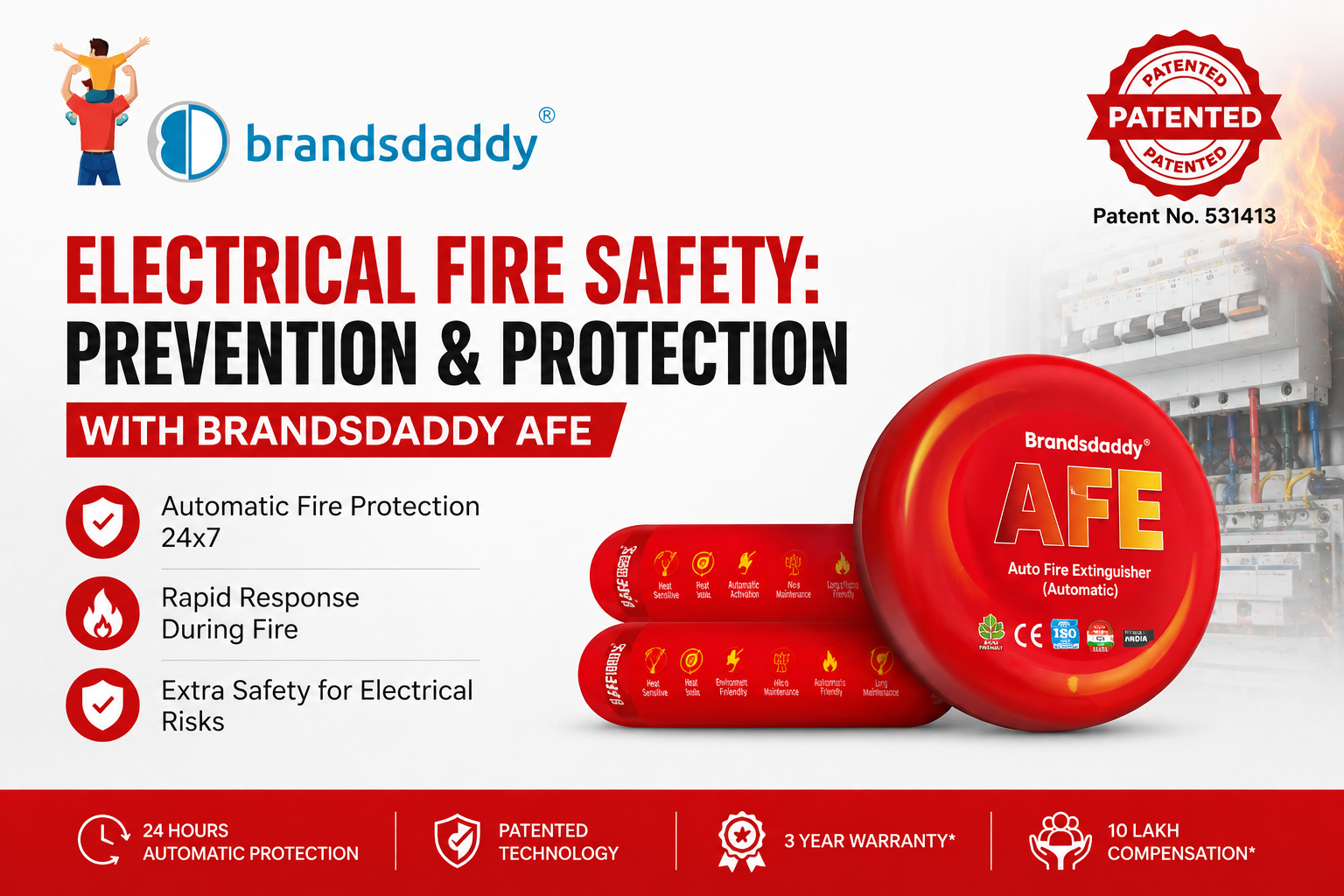
One practical way to strengthen fire preparedness is to combine electrical fire prevention measures with appropriate automatic fire suppression solutions such as Brandsdaddy AFE.
Brandsdaddy AFE is designed to provide automatic fire protection for suitable applications, adding an additional layer of protection where a fire may need to be controlled quickly without waiting for someone to manually operate a conventional extinguisher.
In this guide, we will explain:
- What causes electrical fires
- How to prevent electrical fires
- Common electrical fire warning signs
- How automatic fire protection can strengthen electrical fire safety
- How Brandsdaddy AFE fits into a fire protection strategy
- Where automatic fire suppression can be considered
- What to do during an electrical fire
- Frequently asked questions about electrical fire safety and Brandsdaddy AFE
What Is Electrical Fire Safety?
Electrical fire safety refers to the practices, equipment and procedures used to prevent, detect and respond to fires caused by electrical systems or equipment. It has two important sides:
Electrical Fire Prevention
This involves reducing the possibility of an electrical fault becoming an ignition source.
Examples include:
- Preventing electrical overloading
- Maintaining wiring
- Checking electrical connections
- Using appropriate circuit protection
- Maintaining proper earthing
- Replacing damaged cables
- Avoiding unsafe temporary wiring
- Maintaining electrical equipment
Electrical Fire Protection
This focuses on limiting the consequences if a fire does occur.
It can include:
- Fire detection
- Fire alarms
- Suitable fire extinguishers
- Automatic fire suppression
- Emergency procedures
- Evacuation plans
- Fire safety training
Brandsdaddy AFE belongs to the protection side of this strategy.
It should work alongside proper electrical installation, preventive maintenance and other required fire-safety measures—not replace them.
Why Are Electrical Fires Dangerous?
Electrical fires can develop quickly and may occur in locations where people do not immediately notice the problem.
For example, an electrical fault can develop:
- Inside an electrical panel
- Behind a wall
- Inside machinery
- Near a battery or power system
- Around wiring
- Inside an appliance
- Near a vehicle’s electrical components
- In a commercial electrical room
By the time smoke or flames become visible, the fire may already have spread to nearby combustible materials.
This is where automatic fire suppression can provide an additional layer of preparedness.
Instead of depending entirely on someone noticing the fire, reaching for a manual extinguisher and responding in time, an appropriate automatic suppression device can provide protection designed for its intended application.
What Causes Electrical Fires?
Understanding the causes of electrical fires is the first step toward preventing them.
1. Electrical Short Circuits
A short circuit occurs when electrical current follows an unintended path.
A short circuit can produce heat, sparks or arcing and may ignite surrounding materials.
Short circuit fire prevention therefore starts with properly maintained electrical systems and suitable protective devices.
2. Electrical Overloading
Overloading happens when a circuit carries more electrical load than it is designed to handle.
Using multiple high-power appliances through a single socket, extension board or circuit can increase the risk of overheating.
Avoid overloading electrical circuits and ensure that high-load equipment has appropriately designed electrical connections.
3. Loose Connections
Loose terminals and connections can generate heat.
Over time, excessive heating can damage insulation and electrical components and potentially become an ignition source.
Regular electrical inspection and maintenance are therefore important components of electrical fire prevention.
4. Damaged Wiring
Frayed, cracked, exposed or ageing wires can increase the possibility of electrical faults.
Do not ignore:
- Burn marks
- Melted insulation
- Exposed conductors
- Discoloured cables
- Damaged plugs
- Loose sockets
Damaged electrical components should be inspected and replaced appropriately.
5. Faulty Electrical Equipment
Electrical appliances, machinery, motors, panels and other equipment can develop faults.
A faulty component can generate excessive heat or sparks and potentially start a fire.
Critical equipment should therefore be identified as part of a property’s fire-risk assessment.
6. Poor Electrical MaintenanceEven a properly designed electrical installation can become unsafe if it is neglected.
Regular inspection helps identify potential problems before they become major hazards.
How to Prevent Electrical Fires
A Brandsdaddy AFE should be viewed as part of a wider fire safety strategy.
Before relying on fire protection equipment, reduce the possibility of a fire starting in the first place.
Follow these electrical fire prevention practices:
1. Avoid overloading sockets and circuits.
Do not connect excessive high-power equipment to a single circuit.
2. Inspect electrical wiring regularly.
Look for damaged insulation, exposed wires, loose connections and signs of overheating.
3. Replace damaged electrical equipment.
Do not continue using appliances, plugs or cables that show signs of damage.
4. Maintain proper earthing.
Electrical systems should have appropriate earthing and protection according to applicable requirements.
5. Use suitable circuit protection.
Circuit breakers and other protective devices should be appropriately selected and maintained.
6. Avoid makeshift wiring.
Temporary electrical arrangements can create unnecessary risks.
7. Keep electrical equipment ventilated.
Excessive heat around electrical equipment can increase fire risk.
8. Keep combustible materials away from electrical sources.
Paper, cardboard, fabrics, plastics and other combustible materials should not be unnecessarily stored against electrical equipment.
9. Investigate repeated breaker trips.
A repeatedly tripping breaker may indicate an underlying electrical problem.
10. Add appropriate fire protection.
For identified fire risks, consider suitable fire extinguishers and automatic fire suppression solutions such as Brandsdaddy AFE.
What Are the Warning Signs of an Electrical Fire?
Electrical fires may provide warning signs before flames appear.
Watch for:
Burning Smell
A smell of burning plastic, rubber or insulation can indicate overheating.
Hot Sockets or Plugs
Unusual heat around a socket or plug should be investigated.
Flickering Lights
Persistent flickering may indicate an electrical issue.
Buzzing or Crackling
Unusual sounds from switches, sockets or electrical panels should not be ignored.
Sparks
Sparks from electrical equipment can indicate a fault.
Burn Marks
Black, brown or melted areas around electrical components may indicate overheating.
Repeated Circuit Breaker Trips
Frequent trips may indicate overloads, faults or damaged equipment.
These warning signs should be investigated by a qualified professional.
Where Does Brandsdaddy AFE Fit Into Electrical Fire Safety?
This is where Brandsdaddy AFE becomes an important part of the conversation.
Traditional fire safety often depends on someone:
- Detecting the fire
- Raising an alarm
- Reaching the fire
- Finding the correct extinguisher
- Operating it correctly
- Attempting to control the fire
But a fire can grow while these steps are taking place.
An automatic fire extinguisher provides a different layer of preparedness by being positioned at or near an identified fire-risk area and designed to activate automatically according to its operating mechanism and intended application.
Brandsdaddy AFE can therefore be considered as an additional automatic fire protection layer for suitable applications.
It does not replace electrical maintenance, circuit protection, fire alarms, emergency procedures or manual firefighting equipment.
Instead, it complements them.
Brandsdaddy AFE: Automatic Fire Protection for Faster Response
Brandsdaddy AFE is an automatic fire extinguisher designed to provide automatic fire protection in suitable applications.
The concept is simple:
Identify the Fire Risk
Determine where a fire is most likely to start.
Position the AFE Appropriately
Install the appropriate Brandsdaddy AFE according to the product’s intended application and installation requirements.
Automatic Fire Response
The AFE is designed to respond automatically according to its specific activation mechanism.
Additional Protection
It provides an additional layer of fire protection while the overall emergency response process is initiated.
This makes automatic fire protection particularly relevant for locations where an unattended or difficult-to-monitor fire risk exists.
Why Consider an Automatic Fire Extinguisher for Electrical Fire Protection?
Electrical equipment can sometimes operate continuously or in areas where people are not constantly present.
Examples may include:
- Electrical panels
- Machinery
- Control cabinets
- Equipment rooms
- Power-related installations
- Commercial equipment
- Selected vehicle applications
- Other identified fire-risk areas
In such locations, having an appropriate automatic fire suppression solution can strengthen the overall fire protection strategy.
However, product selection is critical.
The correct Brandsdaddy AFE model should be selected based on the specific fire risk, environment and intended application.
Brandsdaddy AFE vs Waiting for Manual Fire Response
| Conventional Approach | With Automatic Fire Protection |
|---|---|
| Fire must first be noticed | Automatic protection is positioned at the identified risk |
| Someone must reach the extinguisher | Automatic response is part of the protection design |
| Person must operate the extinguisher | Automatic mechanism responds according to its design |
| Response depends heavily on human presence | Adds another layer of preparedness |
| May be delayed when an area is unattended | Particularly useful for suitable identified risks |
Automatic protection should not be viewed as a replacement for a complete fire safety system.
It is an additional layer of protection.
Electrical Fire Safety for Homes
Electrical risks are present in almost every home.
Common sources include:
- Refrigerators
- Air conditioners
- Washing machines
- Microwaves
- Ovens
- Television systems
- Computers
- Chargers
- Extension boards
- Inverters and UPS systems
- Electrical distribution boards
Home electrical fire safety should include:
- Avoiding overloaded sockets
- Maintaining electrical wiring
- Replacing damaged cables
- Keeping electrical equipment dry
- Using appropriate circuit protection
- Keeping combustible materials away from electrical sources
- Maintaining electrical panels
- Keeping suitable fire protection equipment accessible
For selected applications where an automatic fire protection layer is appropriate, Brandsdaddy AFE can be considered as part of the overall fire safety plan.
Electrical Fire Safety for Offices
Modern offices contain a large amount of electrical equipment.
Computers, servers, networking systems, printers, UPS systems, air-conditioning systems and electrical panels can all contribute to the overall electrical fire risk.
Businesses should combine:
Electrical maintenance + fire detection + suitable extinguishers + emergency planning + automatic fire protection where appropriate.
Brandsdaddy AFE can form part of this layered approach for identified fire-risk areas.
Electrical Fire Safety for Commercial Establishments
Shops, restaurants, hotels, warehouses, hospitals and other commercial establishments often have complex electrical installations.
A small electrical fire can result in:
- Property damage
- Business interruption
- Equipment loss
- Smoke damage
- Operational downtime
- Financial losses
Therefore, commercial establishments should not rely on a single fire protection measure.
A layered electrical fire protection system can include:
- Proper electrical installation
- Preventive maintenance
- Circuit protection
- Fire detection
- Fire alarms
- Manual fire extinguishers
- Automatic fire suppression
- Emergency response procedures
- Employee training
Electrical Fire Safety for Industrial Equipment
Factories and industrial facilities may have high electrical loads and expensive machinery operating for long periods.
Potential fire-risk areas should be identified through a professional fire-risk assessment.
Depending on the application, automatic fire suppression can be considered around selected equipment or high-risk areas.
Brandsdaddy AFE can be evaluated as an additional automatic fire protection solution where its specific product configuration and application are appropriate.
The goal is simple:
Identify the risk. Protect the risk. Prepare before the fire.
Can Brandsdaddy AFE Be Used for Electrical Fires?
This is an important question.
Brandsdaddy AFE should be selected according to the specific fire risk and the intended application of the particular AFE model.
Not every automatic fire extinguisher is suitable for every type of electrical equipment or fire scenario.
Before installation, consider:
- Type of electrical equipment
- Fire risk
- Installation environment
- Electrical load
- Surrounding combustible materials
- Product specifications
- Applicable safety requirements
- Manufacturer’s installation instructions
For a specific electrical application, professional assessment and correct product selection are essential.
Do Not Rely Only on a Fire Extinguisher
One of the biggest mistakes in fire safety is believing that buying a fire extinguisher automatically makes a property fire-safe.
It does not.
A strong fire safety strategy follows multiple layers:
Layer 1 — Prevent
Maintain electrical systems and eliminate avoidable hazards.
Layer 2 — Detect
Identify smoke, heat, electrical faults or other signs of fire as early as possible.
Layer 3 — Suppress
Use appropriate fire extinguishing and automatic suppression solutions.
Layer 4 — Respond
Have emergency procedures, evacuation plans and trained personnel.
Layer 5 — Recover
Minimise damage and restore operations safely.
Brandsdaddy AFE strengthens the suppression layer.
What Should You Do During an Electrical Fire?
If an electrical fire occurs:
1. Raise the Alarm
Immediately alert people nearby.
2. Isolate Power If Safe
If the electrical supply can be safely isolated without approaching the fire or putting yourself at risk, disconnect the relevant supply.
3. Do Not Use Water on Energized Electrical Equipment
Water can create a serious electrical shock hazard.
4. Use Suitable Fire Protection Equipment
Only use an appropriate extinguisher or suppression system for the specific fire and only when it is safe to do so.
5. Evacuate
If the fire is spreading, smoke is increasing or the situation is unsafe, evacuate immediately.
6. Contact Emergency Services
Follow your site’s emergency response procedure and contact the appropriate emergency services.
Never put yourself at risk trying to save property.
Brandsdaddy AFE: Prepare Before the Fire
Fire protection should not begin after flames appear.
The right time to prepare is before the fire.
Brandsdaddy AFE brings automatic fire protection into the conversation by helping property owners and businesses think beyond traditional manual firefighting.
Instead of asking:
“What will we do after the fire starts?”
Ask:
“How prepared are we before it starts?”
That change in mindset is at the heart of effective fire safety.
10 Electrical Fire Safety Mistakes to Avoid
1. Overloading Sockets
Too many high-power devices can overload a circuit.
2. Ignoring Burning Smells
A burning smell can indicate overheating.
3. Using Damaged Cables
Damaged insulation can expose electrical conductors.
4. Ignoring Repeated Breaker Trips
The underlying electrical problem should be investigated.
5. Using Temporary Wiring
Improvised connections can create unnecessary fire hazards.
6. Blocking Electrical Panels
Panels should remain accessible.
7. Keeping Combustible Materials Near Electrical Equipment
Maintain appropriate separation.
8. Ignoring Electrical Maintenance
Preventive maintenance is essential.
9. Depending Only on Manual Firefighting
People may not always notice a fire immediately.
10. Waiting Until After a Fire to Install Protection
Fire safety should be proactive, not reactive.
Why Choose Brandsdaddy AFE?
When selecting an automatic fire extinguisher, businesses and property owners should look beyond simply purchasing a product.
Consider:
- Product authenticity
- Intended application
- Installation requirements
- Product specifications
- Manufacturer support
- Warranty
- Appropriate fire-risk assessment
- Reliable source of purchase
Brandsdaddy focuses on providing fire safety solutions designed around practical fire-risk protection.
For customers considering an automatic fire extinguisher, selecting the correct AFE for the intended application is essential.
Do not compromise on fire safety. Choose the authentic Brandsdaddy product from an authorised source.
Frequently Asked Questions About Electrical Fire Safety & Brandsdaddy AFE
What is electrical fire safety?
Electrical fire safety involves preventing electrical faults from causing fires and ensuring appropriate detection, suppression and emergency-response measures are available.
What causes most electrical fires?
Electrical fires can result from short circuits, overloading, loose connections, damaged wiring, faulty equipment, overheating and poor electrical maintenance.
How can I prevent an electrical fire?
Maintain electrical wiring, avoid overloading circuits, use appropriate circuit protection, replace damaged equipment, maintain proper earthing and have electrical installations inspected professionally.
What is an automatic fire extinguisher?
An automatic fire extinguisher is a fire protection device designed to respond automatically according to its specific activation mechanism, without requiring the same manual operation as a conventional extinguisher.
What is Brandsdaddy AFE?
Brandsdaddy AFE is an automatic fire extinguisher designed to provide an additional layer of automatic fire protection for suitable applications.
Can Brandsdaddy AFE replace a conventional fire extinguisher?
No. Automatic fire protection should complement, not automatically replace, the broader fire safety measures required for a property or application.
Can Brandsdaddy AFE be used for electrical fire protection?
The appropriate Brandsdaddy AFE model should be selected based on the specific fire risk and intended application. Always follow the product’s specifications and installation instructions.
Can water be used on an electrical fire?
Water should not be used on energized electrical equipment because it can create a serious electrical shock hazard.
Why is automatic fire suppression useful?
Automatic suppression adds another layer of protection and can provide a response designed for suitable identified fire risks without depending entirely on someone manually operating an extinguisher.
Is electrical maintenance still necessary if I install Brandsdaddy AFE?
Yes. Brandsdaddy AFE is a protection layer, not a substitute for proper electrical installation and maintenance.
Electrical systems should still be inspected, maintained and operated safely.
Where can an automatic fire extinguisher be installed?
Installation depends on the product model, fire risk and intended application. A suitable location should be determined according to the product’s installation requirements and the specific hazard.
Electrical Fire Safety: Prevention First, Protection Always
Electrical fires can cause devastating damage—but many risks can be reduced through proper planning and preparedness.
Start with the basics:
Prevent electrical faults.
Maintain your electrical systems.
Identify high-risk areas.
Keep appropriate firefighting equipment ready.
Add automatic fire protection where appropriate.
And most importantly:
Don’t wait for the fire to start before thinking about fire safety.
Brandsdaddy AFE — Automatic Fire Protection for a Safer Tomorrow.
Choose the right fire protection solution for your risk, use authentic Brandsdaddy products and stay prepared before the fire.
Stay Safe. Stay Prepared. Choose Brandsdaddy.